
Exhibition "In the Forests of Borneo"
Bornean Rhinoceros
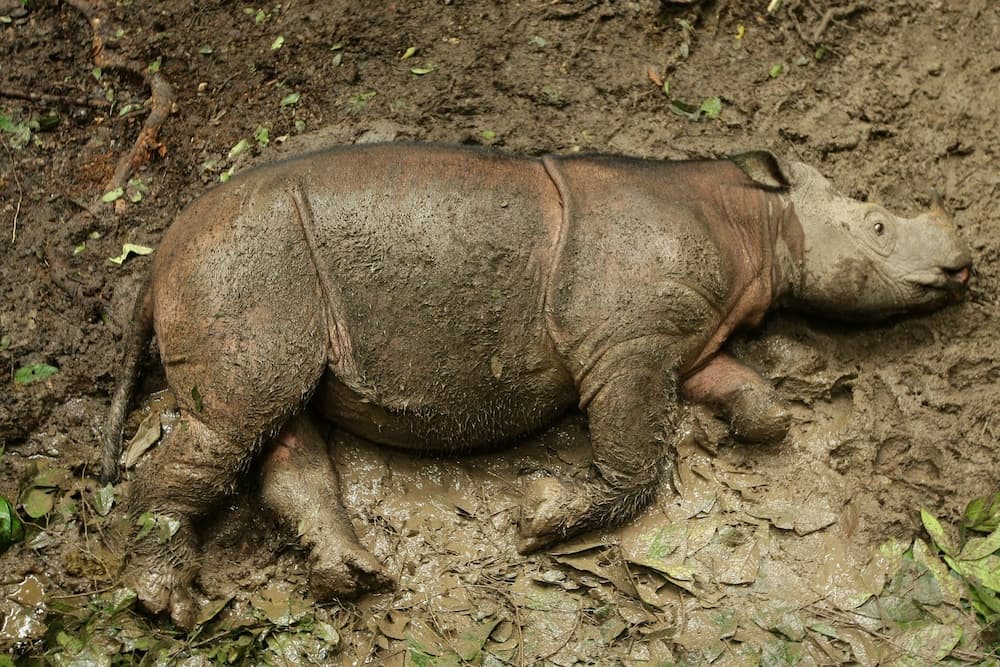
A female Bornean Rhinoceros takes a mud bath in the Nature Reserve of Tabin, in Sabah. azriealliamat
Family: Rhinocerotidae
Scientific name: Dicerorhinus sumatrensis harrisonii
Geographical distribution: endemic to Borneo
Between Africa and Asia, the world hosts five rhinoceros species. Until a century ago, there were 13 genetically and geographically distinct subspecies, but with the “functional” extinction of the Northern White Rhinoceros (Ceratotherium simum cottoni) in Kenya—declared in 2018 after the death of the last male—their number has frighteningly dropped to eight. Five of these are considered critically endangered, with tiny populations absurdly threatened by poaching, driven by misguided superstitions that attribute to their horns a value comparable to that of precious metals.
The Bornean Rhinoceros (Dicerorhinus sumatrensis harrisonii), a gentle and elusive animal that moves alone through the dense forest, is the smallest of all rhinoceroses and the most threatened. A single individual survives in Malaysia under semi-captive conditions in the Tabin Wildlife Reserve (Sabah), and fewer than twenty confirmed animals make up the last wild population in Indonesian Borneo (Kalimantan). The last hope for their survival hangs by a thread, tied to ongoing efforts to protect the island’s central forests from deforestation.